~Towards establishing a sustainable supply framework through the adoption of various biomass fuels~
PT Santomo Resources Indonesia (Head office: Jakarta; President Director: Tomoichi Yamaguchi; hereinafter “SRI”), an Indonesian subsidiary of Santomo Resources Corporation (Head office: Tokyo; President: Tomoichi Yamaguchi; hereinafter “Santomo”), has signed an MOU with PPT Energy Trading Co., Ltd. (Headquarters: Tokyo, President: Fuadi Arif Nasution, hereinafter “PPT”). This agreement aims to establish a framework for the small-lot supply of diverse biomass fuels from Indonesia to biomass power plants in Japan.
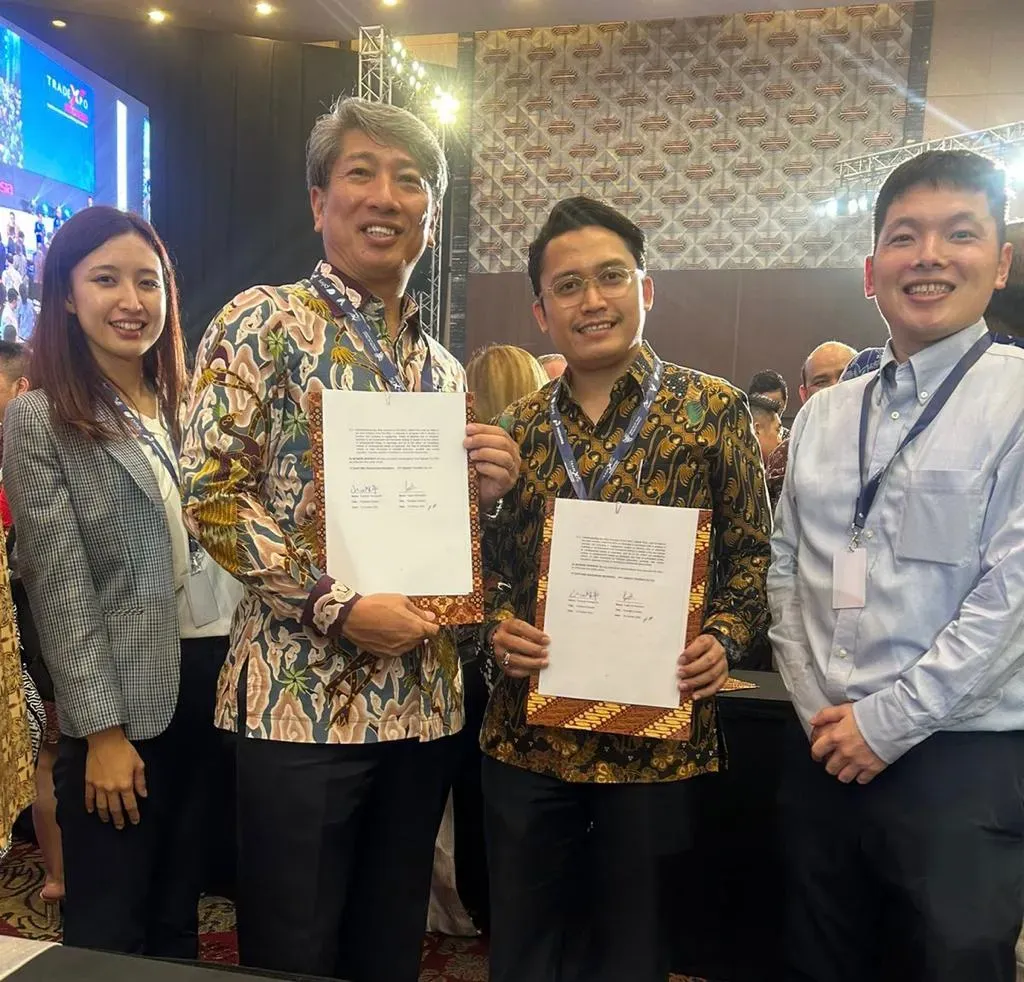
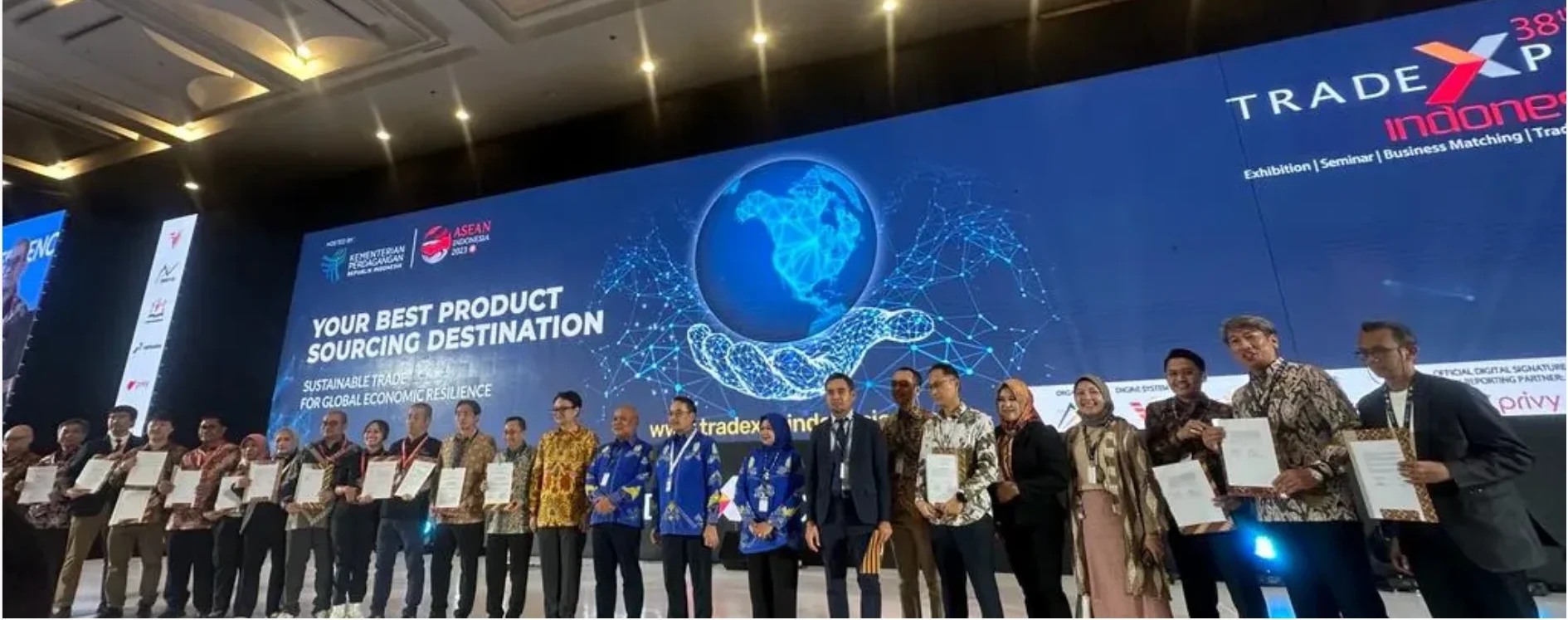
The MOU was signed on October 18, 2023, by Bianto, Deputy General Manager of PPT, and Yamaguchi, President Director of SRI, at the Nusantara Hall during Trade Expo Indonesia 2023 in Jakarta.
Indonesia has a wealth of untapped biomass resources; however, the majority of biomass fuels currently exported from Indonesia to Japan consist of palm kernel shells (PKS). Japan’s demand for biomass fuels has been steadily increasing, with over 3.8 million tons of PKS and more than 4.4 million tons of wood pellets (primarily from Vietnam) imported in 2022. Promoting the use of a broader range of biomass fuels and establishing a diversified supply framework are deemed essential for Japan’s achievement of carbon neutrality by 2050.
Santomo is actively working on the development and supply of pellet fuel derived from rice husks, a byproduct of Indonesia’s rice milling process, leveraging the country’s status as the world’s third-largest rice producer. Additionally, Santomo is focusing on developing and supplying various other biomass fuels, including unused palm-derived waste such as old palm trunks (OPT) and other palm residues that are continuously generated.
Through its renewable energy initiatives centered in Indonesia and this collaboration with PPT, Santomo aims to contribute further to decarbonization in Japan and across Asia, by securing new biomass materials, developing and processing them into user-friendly fuels, and establishing a reliable supply framework.